How Long Should a SaaS Product Video Be?
By Matviy Oshkalo · · 6 min read
There is no single correct length for a SaaS product video. The right number depends on two things: where the video will live, and how warm the audience watching it is. A 15-second ad and a 3-minute onboarding video can both be exactly the right length for their job.
The table below gives the short answer, and the rest of this article explains the reasoning behind each number.
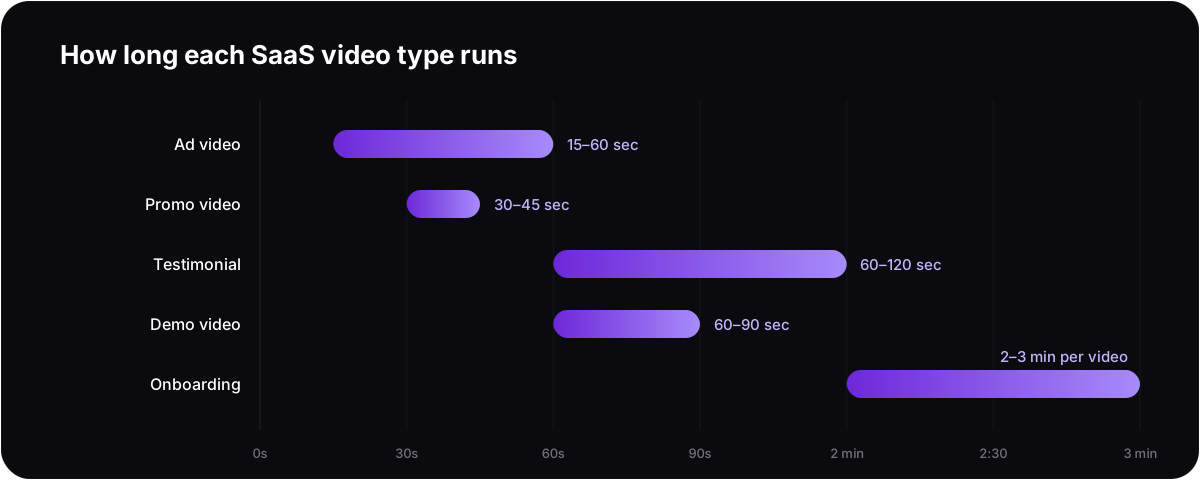
| Video type | Audience | Funnel job | Length |
|---|---|---|---|
| Ad video | Cold | Awareness | 15–60 sec |
| Promo video | Cold to semi-cold | Announcements | 30–45 sec |
| Testimonial / case study | Semi-cold | Consideration | 60–120 sec |
| Demo video | Warm | Conversion | 60–90 sec |
| Onboarding video | Existing customers | Retention | 2–3 min per video |
Audience Temperature Sets the Length
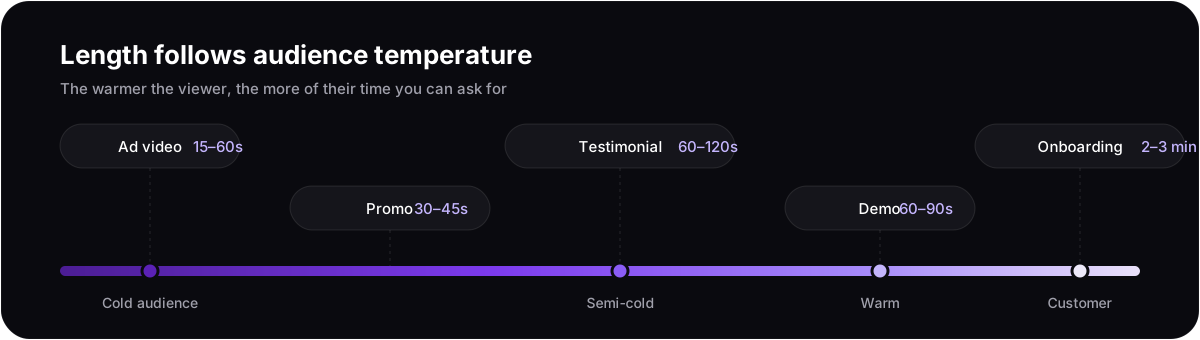
Every viewer sits somewhere on a scale from cold to warm to customer, and that position decides how much of their time you can ask for.
A cold viewer is someone you interrupted. They were scrolling a feed, your ad appeared, and they owe you nothing. The video has a few seconds to earn attention with a strong hook, and after that every additional second has to justify itself.
A warm viewer arrived at your website on purpose. They clicked a link, they have context, and they want to evaluate the product. A hook matters much less here, and the video can open directly with the solution and spend real time showing the product in action.
A customer watching an onboarding video is the most motivated viewer you will ever have. They just paid, they want to succeed with the tool, and they will sit through several minutes if the video helps them get there.
This gives us a working rule: the closer the viewer is to buying, or the more recently they bought, the longer the video can run.
Length by Video Type
Ad videos: 15–60 seconds
Two formats work in ads. The first is a 15-second clip built around a single use case. The second is a full 60-second ad with a short product demo and a features overview. Both target cold audiences, so the hook decides whether anything else in the video gets watched at all.
The demo section in an ad should be brief, but it has to be there, because even three seconds of real product footage separates you from the vague AI-hype ads people have learned to scroll past. The ad's job ends when the viewer clicks through to the landing page, so grab attention, tease the value, and hand off.
Promo videos: 30–45 seconds
Promos announce a new feature or a product launch, and they live in social feeds. Your follower base makes this audience slightly warmer than pure ad traffic, which buys you room for a longer demo fragment and even a line of social proof. A strong hook is still mandatory. The goal at this stage is to inform and tease rather than convert, so resist the urge to pack the full pitch into 40 seconds.
Testimonial and case study videos: 60–120 seconds
These work best as retargeting assets, aimed at people who saw your ads or promos and hesitated. A raw customer interview runs 20 minutes, and the edit's job is to compress it down to the main theses and the biggest outcomes. Closing the video with the end result the product delivers gives the hesitating viewer a concrete picture of what they get.
Demo videos: 60–90 seconds
The demo is the strongest conversion asset in the lineup, and it usually lives on the website. The viewer arrived with intent, so skip the long problem setup and get to the product as fast as possible. Opening directly with "Introducing X, the platform for..." works fine here, and one to one and a half minutes is the sweet spot. If your demo runs past 90 seconds, cutting features works better than testing the viewer's patience. We covered the scene-by-scene structure of a converting demo in our complete guide to SaaS explainer videos.
Onboarding videos: 2–3 minutes per video
Onboarding videos exist to reduce churn in the first weeks of a subscription. A new customer sits at peak motivation, so longer runtimes hold up well here. Even so, one topic per video beats a single full product tour, because a focused three-minute video about the first quick win gets finished, and a twelve-minute walkthrough gets bookmarked and forgotten. Early wins keep customers around longer, and that feeds directly into LTV.
What Retention Data Says
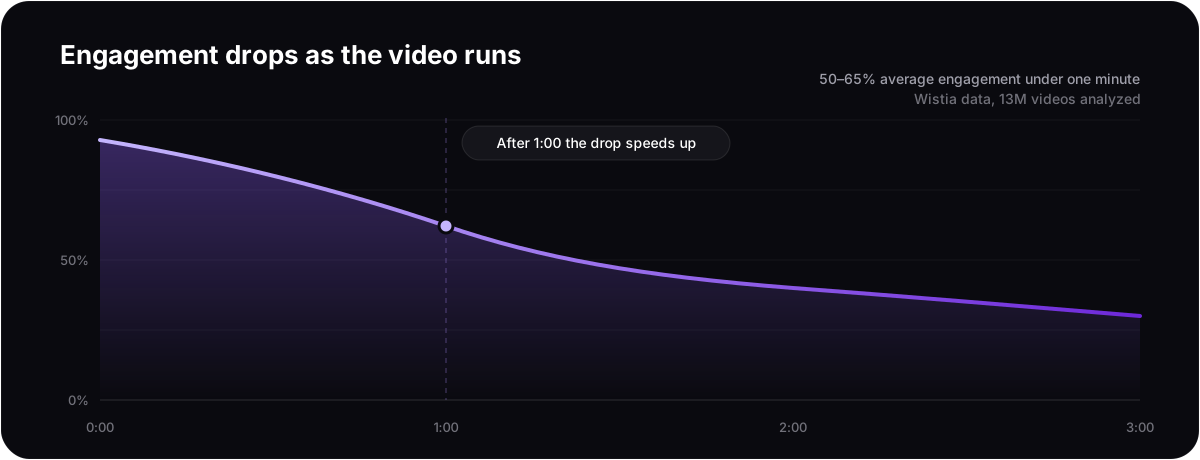
Wistia's State of Video report, built on an analysis of over 13 million videos, shows average engagement of roughly 50–65% for videos under one minute, a steady decline after the first minute, and a steep one past the five-minute mark.
Read those benchmarks with the audience scale in mind. Aggregate numbers average together mostly cold and lukewarm viewers, and that's who the under-one-minute rule applies to. Warm viewers hold attention far longer, which is exactly why demo and onboarding videos can run past the one-minute line without bleeding their audience.
One Long Video or a Package of Short Ones
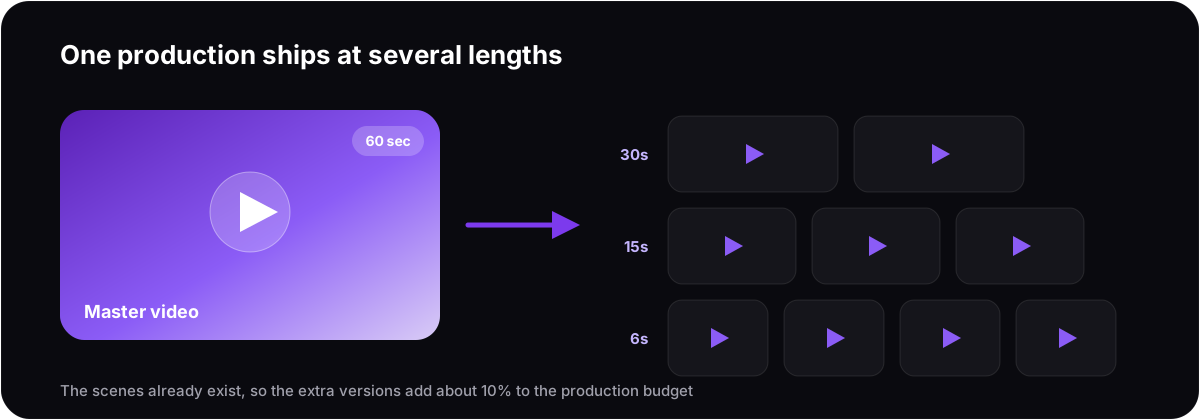
Length stops being a single decision once you realize that one production can ship at several lengths at once. Three approaches make this work.
The first is cutting a master video into shorter versions. A 60-second website demo becomes a 30-second social teaser after a trim and a new opening promise, and it becomes a set of 30, 15, and 6-second ad cuts after another pass. The scenes already exist, so the extra versions add roughly 10% to the production budget.
The second is splitting use cases instead of stacking them. A product with five use cases can ship as five 20-second clips, one use case per clip, rotating evenly in ads. Within a week the viewer assembles the full picture anyway, and each individual clip stays short enough for a cold audience. Producing four 20-second clips costs about the same as one 60-second video.
The third is swapping hooks. The first 5–7 seconds of a video can be replaced while the body stays identical, which turns one production into four testable ads: one opening with the dream outcome, one with the problem, one with a persona callout, and so on. Changing the background color and music between versions makes them read as entirely different videos, since the opening seconds are what people remember.
Budget planning for a package looks different from budget planning for one video, and our pricing breakdown covers what production actually costs at each tier.
Your Script Is Too Long. How to Cut It
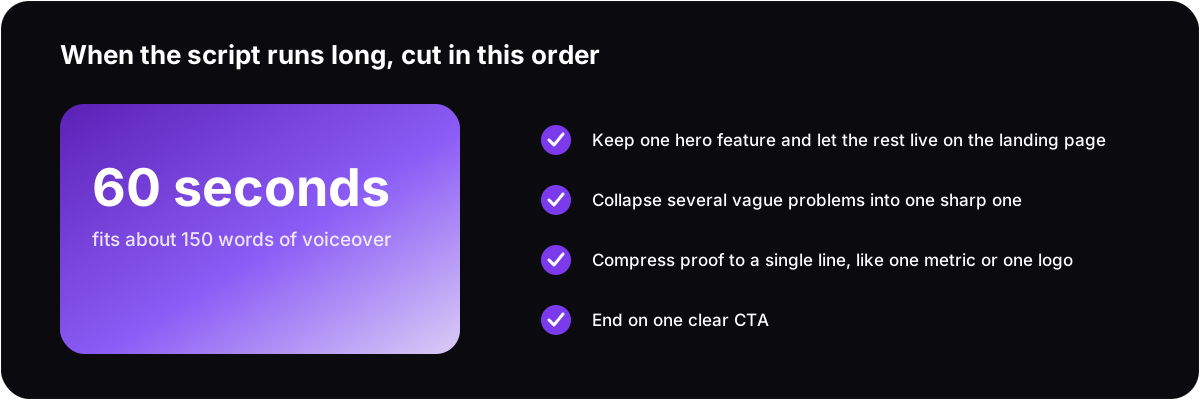
Sixty seconds of comfortable voiceover fits about 150 words, and that constraint does most of the editing for you. When a script overshoots, cut in this order:
- Secondary features go first. Keep one hero feature and let the rest live on the landing page.
- Multiple problems collapse into one. A single sharply drawn pain beats three vague ones.
- Proof compresses to a single line, like one metric or one recognizable customer name.
- The CTA narrows to one action. A viewer offered three next steps usually takes none.
The full scene-by-scene anatomy of a 60-second script, with a worked example, lives in our complete guide.
FAQ
How long should a SaaS demo video be?
Sixty to ninety seconds. The demo audience is warm and arrives with intent, so skip the problem setup, open with the solution, and spend the time showing the product in action. Past 90 seconds, cut features rather than extending the runtime.
How long should a SaaS video ad be?
Fifteen to thirty seconds for social feeds, and up to 60 seconds when the ad includes a short demo and features overview. The audience is cold, so the hook in the first few seconds matters more than anything that follows it.
How many words fit in a 60-second video?
About 150 words of voiceover at a comfortable pace. Scripts that read fine on paper often overshoot this, so read yours out loud with a timer before production starts.
Is a two-minute product video too long?
For a landing page, yes, because that placement works best at 60–90 seconds. For a testimonial used in retargeting or an onboarding video for new customers, two minutes is comfortably within range, since those audiences are warmer and more patient.
If you're planning a video, or a package of them, and want a length recommendation for your specific funnel, get in touch. And if you want to estimate what a video would return at your deal size, our ROI calculator does the math in about a minute.