14 Best SaaS Explainer Video Examples in 2026 (And Why They Work)
By Matviy Oshkalo · · 10 min read
Lists of explainer videos usually run twenty items deep and tell you nothing beyond "great visuals, clear message." This one works differently. Every video below comes from a real SaaS company, was produced recently enough to reflect how the market actually looks in 2026, and earns its place by teaching a specific strategic decision you can reuse. Three of the fourteen are our own productions, and they're marked as such.
The list is subjective by design. We make SaaS product videos every day at Solair Motion, and these are the pieces we point clients to when we discuss what their video should do. The format itself keeps earning its place: in Wyzowl's 2026 survey, 96% of people said they've watched an explainer video to learn about a product or service.
The Three Styles, Briefly
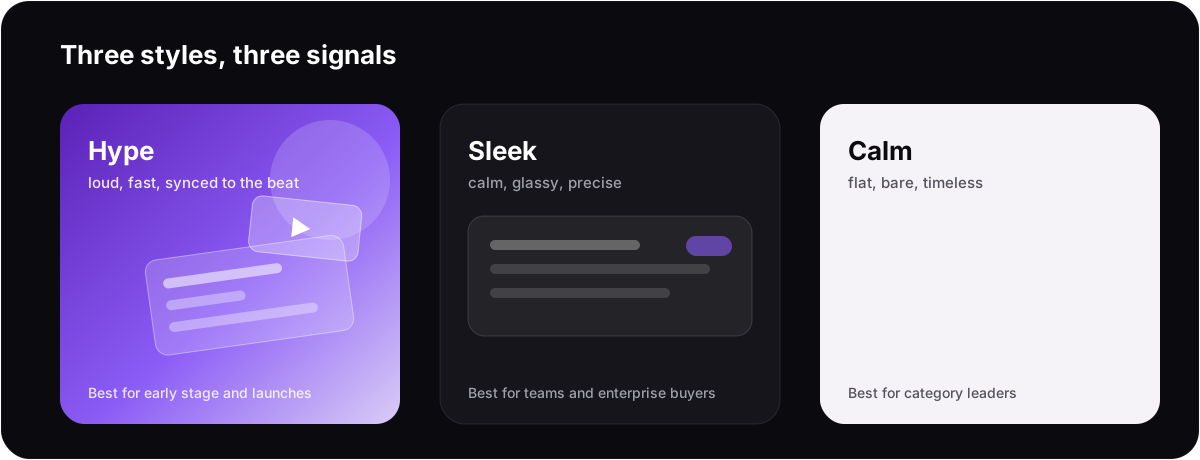
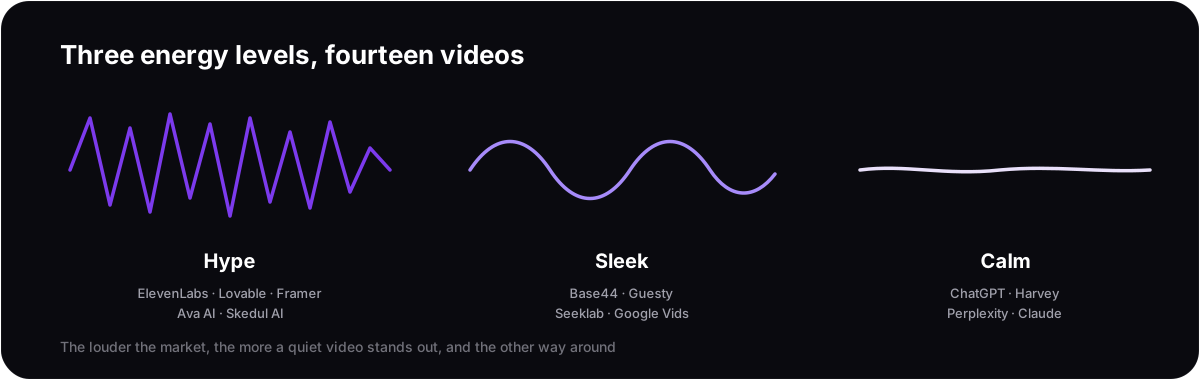
Almost every SaaS product video on the market falls into one of three styles, and the examples below are grouped by them. Hype is fast and loud: dynamic camera moves, effects synced to music, built to win attention from a cold audience. Sleek is the balanced middle: flat compositions, glassy UI, calm pacing that reads as product maturity. Calm is the stripped-down extreme: black and white, no effects, a style reserved for brands whose name already carries the weight. The full breakdown of all three, including which one fits which company stage, lives in our complete guide to SaaS explainer videos.
Hype: Built to Win Attention
1. ElevenLabs
ElevenLabs sells AI voice, which means the product itself is invisible. The video, released in March 2026, solves that by making the interface and the energy carry what the ears would normally judge, and the pacing signals a category leader moving fast. The strategic lesson: when your product's core value can't be shown directly, the production quality of the video becomes the proof.
2. Lovable 2.0
Released in April 2025 as the official 2.0 announcement, this is the piece that shows why the whole market started copying Lovable, the company whose videos defined the Hype style. The energy matches the product promise: if the tool builds apps at absurd speed, the video has to feel like that speed. Worth studying as the reference point for the style, and also as a warning, because imitations that copy the effects without this level of message discipline end up as noise.
3. Framer
The 2025 launch video for Framer 3.0. Framer sells design tooling to people with strong visual taste, so the video's bar is brutal: the audience judges the product by the video's own craft. Framer leans into that with motion design that doubles as a portfolio piece. The lesson for design-adjacent SaaS is that your video's aesthetic IS your product demo, whether you plan it that way or not.
4. Ava AI, by Solair Motion
Our 60-second demo for an AI sales rep platform, released in June 2026. Ava entered a market where AI feedback gets dismissed by default, so the video had to break that skepticism head-on: it leads with measurable skill scoring rather than vague "AI-powered coaching" claims, and the premium production positions a day-one brand as an established player. The takeaway: when the market distrusts your category, show the measurable mechanism, and let production quality do the trust-building.
5. Skedul AI, by Solair Motion
A 30-second explainer for an AI scheduler, released in May 2026, and a positioning problem more than a production one. Everyone has tried a planner and dropped it within a week, so the video's one job was to separate Skedul from that memory: it plans your day for you and learns your habits instead of demanding discipline. Thirty seconds forces the message down to that single contrast, which is exactly why the video works.
Sleek: Selling Maturity
6. Base44, Ad Video
"Build it your way with Base44," released in March 2026. Base44 pioneered the Sleek style together with Wix Studio, and this ad shows the core move: restraint as a status signal. Very little happens on screen at any given moment, and that scarcity of motion makes every product shot land harder. For a company selling to serious builders, the calm pacing says the product doesn't need to shout, which is a message no amount of copy can deliver.
7. Base44, Second Video
Worth watching back-to-back with the first one, because the strategic lesson here is consistency. Base44's videos share a visual system: same pacing logic, same UI treatment, same tonal register. That turns every new video into a brand asset that compounds instead of a one-off. If you plan more than one video, and you should, design the system before the first one ships.
8. Guesty
Guesty runs property management for short-term rentals, and this April 2026 video introduces ReplyAI, a feature that automates guest messaging and tasks. The strategic job is selling an AI feature inside an operations-heavy product to buyers who fear complexity, so the video keeps the pacing even and shows the feature working inside a real workflow. The lesson for platform products: one clean workflow sells the platform better than a tour of everything it does.
9. Seeklab, by Solair Motion
A search bar is the least cinematic feature in e-commerce, and this 40-second explainer, released in July 2026, had to make people stop for one. The answer came from the product itself: we pushed the AI to its edge with absurd queries like "I want to look like a zebra," and it found the products every time. That became the hook. The lesson: when the feature looks boring, the extreme use case is the story, because it proves the capability better than any feature list.
10. Google, Introducing Google Vids
The April 2024 launch of Google Vids, and a corporate launch done right. Google had to explain a brand-new product to an audience that wasn't asking for it, so the video leans on a familiar problem before revealing the unfamiliar solution. The problem-first structure is the same arc that works for a seed-stage startup, executed at enterprise scale, which makes this a useful proof that the fundamentals don't change with company size.
Calm: Confidence Without Effects
11. ChatGPT
OpenAI's October 2025 trailer for apps inside ChatGPT. The company can afford the most expensive production on earth and chooses almost none: the video is essentially the product doing its job, presented without decoration, and that choice is the message. The product needs no dressing up. This works because the brand already has the audience's attention. For a company that still has to earn attention, copying this approach usually reads as a small budget rather than a big statement.
12. Harvey
Harvey sells AI to lawyers, the most skeptical, risk-averse audience in software, and released this video in June 2026. The restraint of the video mirrors the judgment the product promises: "delegate the work, own the judgment" is a message about control, and a flashy video would contradict it. The lesson: your video's style makes a claim about your product's values, so make sure the two agree.
13. Perplexity
"Shop with Perplexity," released in November 2025 for the company's move into AI shopping. Launching a consumer commerce feature is exactly the moment a brand is tempted to get loud, and Perplexity does the opposite: the calm, information-first delivery carries the research brand's trust codes into a new category. The lesson: launch new categories in the voice people already trust you for.
14. Claude
Anthropic's July 2026 announcement of Claude Cowork coming to mobile and web. The video language is warm minimalism: no effects race, no feature stacking, a single idea delivered slowly enough to actually land. In a category where every competitor shouts about capabilities, the quiet delivery differentiates by contrast. The takeaway mirrors the whole Calm section: when the market is loud, lowering your voice can be the loudest move available.
What the Best Ones Share
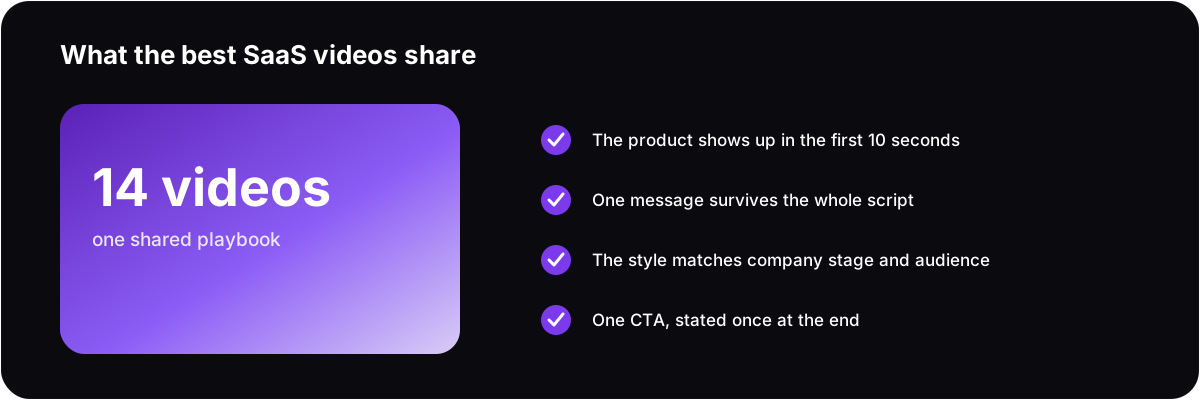
Across all three styles, the fourteen videos above repeat the same decisions, and the data rewards that discipline: Wistia's analysis of over 13 million videos puts average engagement at 50–65% for videos under one minute, which is the zone most of these examples live in. The product appears early, usually within the first ten seconds, because the audience came to see it. Each video carries one message and defends it against everything else that wanted to fit into the script. The style matches the company's stage and audience temperature rather than the founder's personal taste. And every video ends with one action, stated once.
The scene-by-scene structure behind these decisions is in the anatomy section of our complete guide, and the reasoning behind each video's runtime lives in our video length guide.
Making One for Your Product
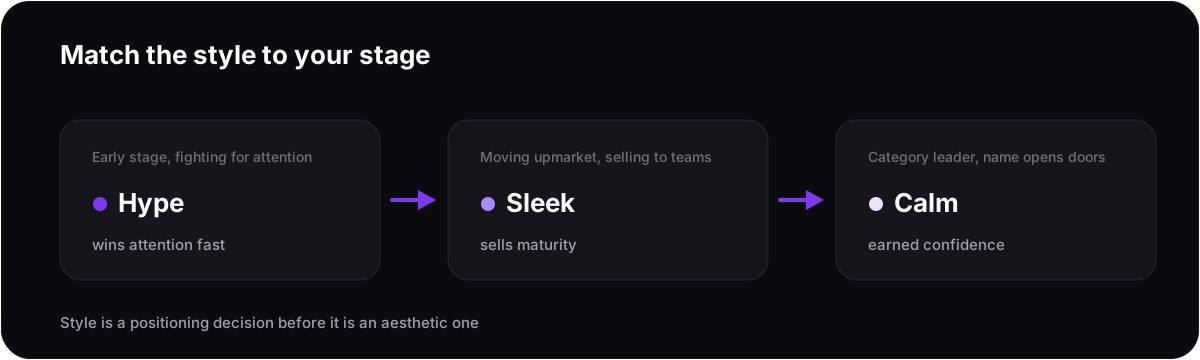
Picking a style comes down to stage and audience. Early-stage companies fighting for attention usually get the most from Hype. Companies moving upmarket, selling to teams and enterprises, fit Sleek. Calm is earned, and it works when your name already opens the meeting.
Budgets for videos at this level are covered in our pricing breakdown, and our ROI calculator shows what a video would return at your deal size.
FAQ
Which explainer video style should my SaaS choose?
Match the style to your stage. Hype fits early-stage products that need attention fast, Sleek fits companies selling maturity to teams and enterprises, and Calm fits established brands whose audience is already listening. Style is a positioning decision before it's an aesthetic one.
How much do videos like these cost?
The examples above span everything from boutique-studio budgets to enterprise productions. As a reference, boutique studios producing at this level charge $800–$3,000 per video, and the full cost breakdown by tier covers what moves the price.
How long should a SaaS explainer video be?
Sixty seconds is the sweet spot for a landing page explainer, with 15–30 seconds for ad cuts. The right length depends on the video's type and how warm the audience is, and our video length guide breaks down every case.
If one of these styles feels like your product, get in touch and we'll tell you what a video in it would look like for your funnel and your stage.